By 2025, immigration policy will be shaped by global trends, technological advancements, and public opinion, requiring adaptable approaches to address the diverse needs of immigrants and the economy.
What’s next for immigration in 2025? As the world navigates complex socio-political changes, understanding future immigration patterns becomes crucial. What challenges and opportunities could arise? Let’s take a closer look.
Current immigration trends and statistics
Understanding the current immigration trends is crucial as we approach 2025. These trends highlight how people move between countries and the factors driving their decisions. With recent policy shifts and global events, the landscape of immigration is changing rapidly.
Significant Trends in Immigration
Several factors influence today’s immigration patterns. First, economic opportunities continue to attract people from around the world. Many individuals seek better jobs and living conditions, especially in developed countries.
Additionally, conflicts and environmental changes are pushing people to leave their home countries. These aspects create a complex situation for governments trying to manage immigration effectively.
Key Statistics
Here are some important statistics related to immigration:
- In 2023, the number of international migrants reached approximately 281 million.
- About 48% of migrants are women, significantly impacting family structures and communities.
- Developed countries saw a 15% increase in asylum applications compared to previous years.
Moreover, technology plays a vital role in shaping these trends. Many governments now use advanced technologies to process immigration applications faster. This approach not only streamlines the process but also improves security measures to ensure safe and legal immigration.
Looking forward, some experts predict that immigration will continue to grow due to globalization and demographic changes. Countries that adapt to these trends will be better positioned to benefit from the social and economic contributions of immigrants.
Impact of policy changes on immigration
The impact of policy changes on immigration is significant, as these adjustments can directly influence the lives of millions. Changes in laws and regulations can create new pathways for immigrants or tighten restrictions, shaping both the experience of individuals and the overall landscape of migration.
Recent Policy Changes
In the past few years, many countries have re-evaluated their immigration policies. For example, some nations have increased the number of visas available for skilled workers, aiming to attract talent. Others have implemented stricter requirements, making it harder for families to reunify.
- Increased focus on border security has led to more stringent checks.
- Temporary work programs have become more popular in response to labor shortages.
- Several countries are now streamlining application processes to reduce wait times.
Each of these changes has a polarizing effect, influencing public opinion and the political landscape. Advocacy groups often challenge restrictive policies, arguing that they undermine human rights and the economy.
Long-term Effects
Long-term impacts of immigration policy changes can alter demographic trends. For instance, a welcoming policy can lead to increased diversity and economic growth. On the other hand, more restrictive measures may discourage immigrants, leading to labor shortages in critical sectors.
Furthermore, policies that streamline immigration processes often result in a more integrated society. These immigrants contribute not only to the economy but also to cultural richness. In contrast, strict policies can lead to underground economies and increased vulnerability among undocumented populations.
Looking ahead, ongoing assessments of immigration policies will be crucial. Governments must balance security and humanitarian needs, ensuring that their policies evolve with changing global dynamics.
Role of technology in immigration processes
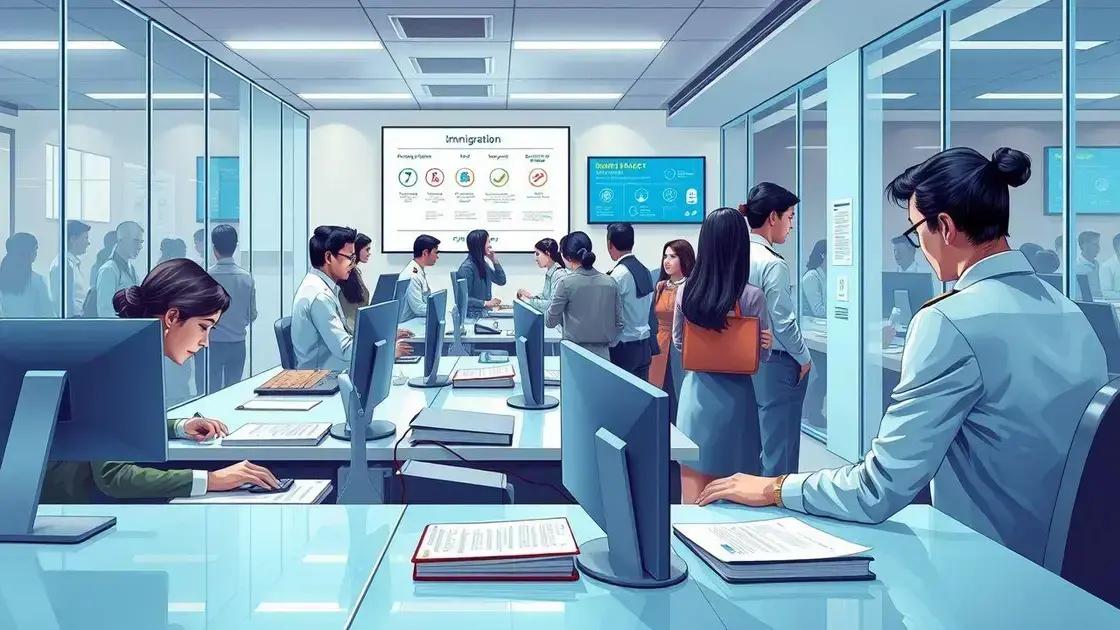
The role of technology in immigration processes continues to evolve, significantly influencing how immigrants interact with governments. Technology streamlines these processes, making them more efficient and accessible.
Digital Application Systems
Many countries have implemented digital application systems to simplify the visa and residency applications. These online platforms allow applicants to submit documents, track their progress, and receive updates in real-time. This innovation reduces paperwork and speeds up processing times.
- Applicants can gather all necessary documents online.
- Real-time updates help manage expectations and reduce anxiety.
- Automated checks minimize errors in applications.
Moreover, technology enables authorities to analyze data more effectively. By using advanced analytics, governments can detect patterns and make informed decisions about immigration policies.
The Impact of Biometric Technology
Biometric technology plays a crucial role in enhancing security within immigration systems. Fingerprints, facial recognition, and iris scans are commonly used to verify identities, ensuring that the right individuals receive access.
This method not only boosts security but also improves efficiency. With faster identification processes, border control can manage higher volumes of travelers more effectively.
As we move into 2025, the use of artificial intelligence (AI) will likely expand in immigration processes. AI can assist in predicting trends and automating routine tasks, allowing personnel to focus on more complex cases.
Furthermore, mobile technology holds great promise for immigrants. Many now have access to apps that guide them through the immigration process, providing resources and support at their fingertips.
Challenges facing immigrants in 2025
The challenges facing immigrants in 2025 are expected to be diverse and complex. As global dynamics shift, the issues that immigrants encounter can significantly impact their integration and quality of life.
Legal Hurdles
Legal challenges remain a primary concern for many immigrants. In some countries, changing immigration laws can create uncertainty and confusion. Navigating through various visa options and requirements can feel overwhelming.
- Increased scrutiny during the application process can lead to delays.
- New regulations may limit pathways to legal residency.
- Asylum seekers face changing standards for eligibility.
Additionally, inconsistent policy enforcement can result in fear and anxiety among immigrant communities, discouraging them from seeking support or pursuing opportunities.
Economic Barriers
Economic challenges are another significant hurdle. Many immigrants struggle to find stable employment that matches their qualifications and skills. Language barriers and lack of local experience often hinder their job prospects.
Moreover, high living costs can add pressure on newly arrived immigrants. Many find it challenging to balance expenses with lower-paying jobs.
Access to essential services can also be limited. Without proper support networks or knowledge, immigrants may struggle to navigate healthcare, education, and housing systems.
Social Integration Issues
Social integration can pose additional difficulties for immigrants. Adapting to a new culture while maintaining one’s identity is a delicate balance. Many newcomers experience isolation or find it hard to make connections within their new communities.
Discrimination or bias from others can also hinder the integration process. Such experiences can lead to feelings of exclusion and impede immigrants’ ability to participate fully in society.
Looking ahead, addressing these challenges requires collaboration between governments, non-profits, and community organizations. By working together, they can create more inclusive environments that support immigrants in their journey.
Future projections for immigration policy
Future projections for immigration policy reflect changing demographics, economic needs, and political landscapes. As we approach 2025, understanding these trends is essential for stakeholders on all sides.
Adapting to Global Trends
One major projection is the growing need for adaptable immigration policies that respond to evolving global situations. Economic shifts, such as labor shortages in certain sectors, may prompt governments to create more inclusive immigration pathways.
- Countries may introduce more visa options for skilled workers.
- Increased focus on refugees and asylum seekers could lead to revised eligibility criteria.
- Policies promoting family reunification are expected to gain support.
As the global economy shifts, nations may also adopt policies that prioritize not just high-skilled workers but also those in essential sectors like healthcare and agriculture.
Technological Integration
Technology is expected to play a significant role in the future of immigration policy. Governments will likely implement more automated systems to process applications and manage immigration data. This can lead to faster processing times and more efficient resource allocation.
Incorporating artificial intelligence (AI) might enhance decision-making regarding visa approvals. AI can help predict trends based on data analysis, allowing agencies to adapt policies proactively.
The Importance of Public Opinion
Public sentiment regarding immigration will continue to influence policy directions. Governments may respond to citizens’ concerns by tightening restrictions or introducing compassionate measures to support immigrants.
Ongoing dialogues and community engagement will be essential to shaping fair immigration policies. Advocacy groups may push for reforms that emphasize humanitarian needs while addressing national security.
By analyzing these trends and projections, it’s clear that immigration policy will be dynamic, requiring flexibility and responsiveness to meet both domestic and global challenges.
FAQ – Frequently Asked Questions about Immigration Policy in 2025
What are the key challenges immigrants will face in 2025?
Immigrants may encounter legal hurdles, economic barriers, and difficulties in social integration as policies and public opinions evolve.
How will technology impact immigration processes?
Technology will likely streamline application processes and enhance security, making it easier for authorities to manage immigration more efficiently.
Why is public opinion important in shaping immigration policies?
Public sentiment can influence government decisions, prompting them to tighten or relax policies based on citizens’ concerns and needs.
What role will adaptable policies play in future immigration?
Adaptable policies will help countries respond to changing economic and demographic needs, ensuring that they remain effective and inclusive.