Staying safe during severe weather events requires preparation, awareness of alerts, creating an emergency kit, and having a family communication plan for quick response to dangerous conditions.
Live weather warnings across the U.S. play a crucial role in keeping us safe from unpredictable conditions. Have you ever wondered how these warnings impact your daily life? Let’s dive into what you need to know.
Understanding live weather warnings
Understanding live weather warnings is essential for keeping yourself and your loved ones safe. These warnings provide crucial information about severe weather conditions that may affect your area. Knowing how to interpret these warnings can make all the difference in ensuring your safety during storms, floods, or other extreme weather events.
Live weather warnings come in various forms and can be disseminated through multiple channels, including mobile apps, radio, and television. It’s important to stay updated by subscribing to reliable weather services and using apps that send real-time alerts. This way, you can be prepared ahead of time.
Types of Weather Alerts
There are several types of weather alerts you should be aware of:
- Severe Thunderstorm Warning: Indicates that severe thunderstorms are occurring or imminent.
- Tornado Warning: Issued when a tornado has been spotted or indicated by radar.
- Flood Watch: Alerts you that conditions are right for flooding but not yet occurring.
- Winter Storm Warning: Warns of severe winter weather affecting travel and outdoor safety.
Each type of alert serves a specific purpose and varies in the level of urgency. It’s vital to understand what these warnings mean. Don’t ignore them; take them seriously. When a tornado warning is issued, for instance, seek shelter immediately, as it indicates a tornado has been sighted.
How to Stay Informed
To keep yourself informed, consider these methods for receiving live weather updates:
- Monitor local news broadcasts for updates.
- Download weather apps that provide alerts.
- Listen to NOAA Weather Radio for continuous updates.
- Follow local meteorologists on social media for timely information.
Staying informed about weather conditions will empower you to take the necessary precautions. It’s always better to be safe than sorry, especially during severe weather episodes.
When you receive a weather alert, trust the information provided and prepare accordingly. Check supplies, secure loose items outside, and discuss safety plans with your family. Remember, paying attention to live weather warnings can significantly reduce the risks posed by severe weather events.
Types of weather alerts you should know
Understanding the different types of weather alerts can help you respond to severe weather effectively. Each alert serves a unique purpose and informs you how to stay safe during dangerous conditions. By knowing what these alerts mean, you can take timely action to protect yourself and your loved ones.
There are several critical weather alerts issued by the National Weather Service and other weather monitoring organizations. Familiarizing yourself with these alerts puts you in a better position to prepare for any adverse weather affecting your location.
Key Weather Alerts
Some of the most common weather alerts include:
- Severe Thunderstorm Warning: This alert indicates that a severe thunderstorm is happening or is likely to occur in your area, capable of producing damaging winds, hail, or heavy rain.
- Tornado Watch: A tornado watch means that conditions are favorable for tornadoes to develop. It is crucial to stay alert and prepared.
- Tornado Warning: When a tornado is sighted or indicated by radar, a tornado warning is issued, signifying immediate danger.
- Flood Warning: A flood warning is given when flooding is imminent or currently happening, and you should take precautionary measures.
Each of these alerts has specific recommendations on how to respond. For example, during a tornado warning, finding shelter in a sturdy building is essential. Meanwhile, a flood warning may require you to evacuate low-lying areas.
Other Important Alerts
In addition to severe storms and tornado alerts, there are other weather warnings you should pay attention to:
- Winter Weather Advisory: This alert indicates that hazardous winter weather conditions are expected, including snow or ice.
- Heat Advisory: When high temperatures create dangerous conditions, a heat advisory is issued to alert the public to take precautions.
- Air Quality Alert: This alert informs you when air quality may be unhealthy for sensitive groups, such as children and the elderly.
Staying informed about these alerts can significantly enhance your safety. You can subscribe to notifications through weather apps or local news outlets. By paying attention to the various types of alerts, you can better protect yourself and others during severe weather events.
How to access live weather updates
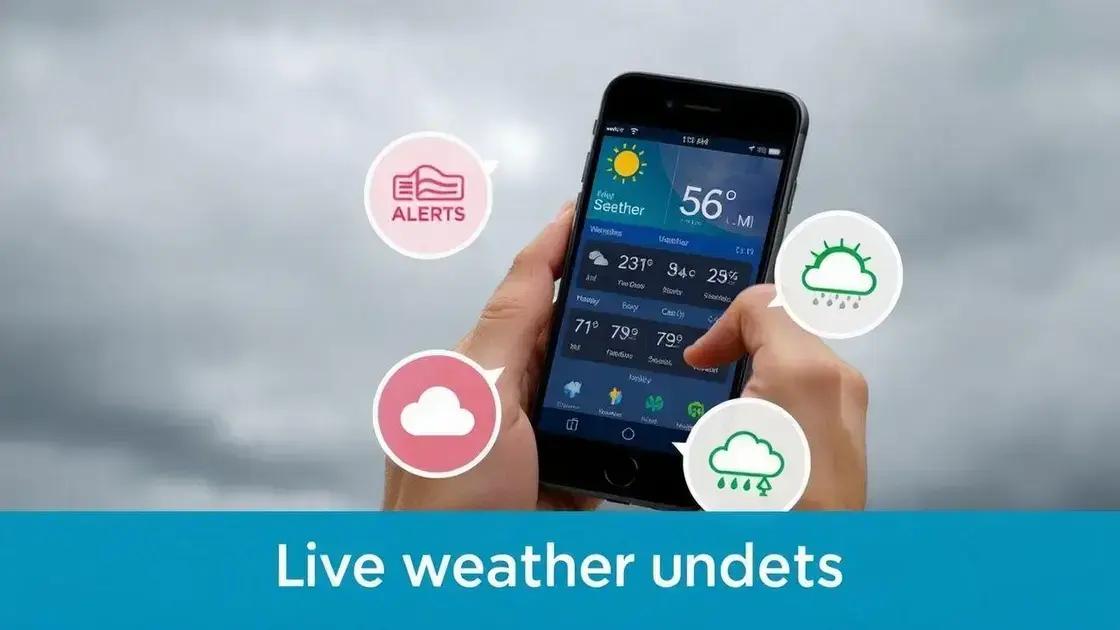
Accessing live weather updates is crucial for staying informed and safe during severe weather conditions. There are several reliable methods to get these updates quickly. Whether you prefer using technology or traditional methods, knowing how to access weather information can make a big difference in your preparedness.
One of the easiest ways to receive live weather alerts is by using smartphone apps. Many weather applications provide real-time updates and notifications specific to your location. By enabling push notifications, you can get alerts directly on your phone, ensuring you’re always informed.
Popular Weather Apps
Some popular apps to consider include:
- The Weather Channel: Offers accurate forecasts and alerts tailored to your area.
- AccuWeather: Provides detailed forecasts and live weather warnings.
- NOAA Weather Radar: Gives access to radar maps and severe weather alerts directly from the National Oceanic and Atmospheric Administration.
- Weather Underground: Features hyper-local forecasts and community-based weather updates.
In addition to apps, keeping an eye on local news broadcasts can also be beneficial. Local television and radio stations often provide live updates during severe weather events. Listening to your local radio station can keep you informed, especially if power outages occur.
Social Media and Websites
Many meteorologists and weather services utilize social media platforms to share updates. By following trusted sources on platforms like Twitter and Facebook, you can receive timely notifications and interesting insights.
Additionally, many government websites provide updates on weather conditions, warnings, and preparedness tips. Bookmark these sites for quick access:
- weather.gov: The National Weather Service’s official site, providing up-to-date alerts.
- ready.gov: Offers preparedness information for various emergencies.
By combining these sources, you can ensure that you have constant access to live weather updates. Being informed increases your ability to respond appropriately to changing weather conditions.
The role of technology in weather warnings
The role of technology in weather warnings is vital for ensuring public safety during severe weather conditions. Advanced tools and systems have transformed how we receive and interpret weather information. This has made it easier for everyone to stay informed and respond appropriately during emergencies.
One significant advancement is the use of radar technology. Doppler radar allows meteorologists to track storms in real-time, providing accurate information on wind speed and precipitation. This technology can detect severe weather, such as tornadoes and thunderstorms, before they reach populated areas.
Emergency Alert Systems
Various emergency alert systems play a crucial role in disseminating weather warnings. These systems automatically notify residents about severe weather conditions in their area. For example:
- Wireless Emergency Alerts (WEA): These are short emergency messages sent by authorized government authorities to alert people about severe weather, missing persons, and other emergencies.
- NOAA Weather Radio: This service broadcasts continuous weather information directly from the National Oceanic and Atmospheric Administration, providing updates on severe weather and emergencies.
- Smartphone Alerts: Many weather applications on smartphones offer customizable alerts. Users can receive notifications based on their specific locations, ensuring timely updates.
In addition to alerts, technology also helps visualize weather patterns. Weather apps provide interactive radar maps, showing the movement of storms and precipitation. This visual representation helps users understand when bad weather will arrive and how it will affect them.
Social Media and Communication
Social media platforms have also become essential tools for sharing weather updates. Many meteorologists and local news stations share live updates, safety tips, and real-time video during severe weather events. This rapid communication helps spread important information quickly to a broad audience.
Integrating technology in weather warnings is enhancing safety and preparedness for everyone. By staying connected and informed through various technological channels, individuals can take action to protect themselves and their families from severe weather events.
Staying safe during severe weather events
Staying safe during severe weather events is essential for protecting yourself and your loved ones. When severe weather strikes, having a plan in place can make a significant difference. Knowing how to respond quickly to alerts and warnings can save lives.
One of the first steps in ensuring safety is to stay informed. Pay attention to live weather updates and alerts. Use reliable sources, such as weather apps, radio, and television, to receive timely information on severe weather conditions. Also, make sure that your mobile devices are charged and reachable, so you can receive alerts no matter where you are.
Preparing for Severe Weather
Preparation is key. Here are some actions you can take before a severe weather event occurs:
- Create an emergency kit: Stock your kit with essentials such as water, non-perishable food, flashlight, batteries, and important documents.
- Develop a family plan: Make sure everyone knows how to reach each other and where to go if evacuation is necessary.
- Identify safe locations: Choose safe places in your home, such as a basement or an interior room, to shelter during severe storms or tornadoes.
- Practice your plan: Regularly review your emergency plan with your family to ensure everyone knows their roles and responsibilities.
During a severe weather event, remain calm and listen to ongoing updates. If you receive a storm or tornado warning, seek shelter immediately. Avoid windows and doors, as these can shatter and cause injury. If you are in a vehicle and a tornado approaches, find a sturdy building or lie flat in a low-lying area.
Staying Safe After the Storm
After the severe weather has passed, stay cautious. Check for hazards such as downed power lines, broken glass, and other debris. Always assume that fallen wires are live and dangerous. If your home has sustained damage, avoid using candles for light, as they can ignite flammable materials.
Communicate with family and friends to report your condition and check in on their safety. Utilize social media and messaging apps cautiously, as these platforms may be overloaded during emergencies. Keep an eye out for updates about road conditions and services in your area.
By preparing ahead of time and knowing how to stay safe during and after severe weather events, you can protect yourself and ensure your family is ready to face any situation.
In summary, staying safe during severe weather events requires preparation and awareness. By understanding weather alerts and using technology to stay informed, you can take necessary actions to protect yourself and your family. Always remember to have an emergency kit ready, develop a family plan, and stay updated on the latest weather information. Together, these steps will help ensure your safety in the face of unpredictable weather.
FAQ – Frequently Asked Questions about Staying Safe During Severe Weather
What should I include in my emergency kit?
Your emergency kit should include essentials like water, non-perishable food, a flashlight, batteries, a first aid kit, and important documents.
How can I receive live weather updates?
You can receive live weather updates through weather apps on your smartphone, local news broadcasts, and NOAA Weather Radio.
What are safe locations in my home during a storm?
Safe locations include interior rooms, basements, or any space away from windows and doors to protect against high winds and flying debris.
How can I communicate with my family during severe weather?
Establish a family communication plan that includes designated meeting places and contact methods. Use mobile phones or messaging apps when available.