To qualify for Section 8 housing, applicants must meet income limits, provide necessary documentation, and have eligible citizenship status, allowing access to rental assistance in the private housing market.
How to qualify for Section 8 housing can feel overwhelming, but it doesn’t have to be. By understanding the eligibility criteria and application process, you can take significant steps toward securing affordable housing. Have you wondered what documents are essential for your application?
Understanding Section 8 housing benefits
Understanding Section 8 housing benefits can seem confusing at first, but it’s essential for those seeking affordable living options. This program, managed by the U.S. Department of Housing and Urban Development (HUD), provides rental assistance to low-income families, individuals, and the elderly.
What are Section 8 Housing Benefits?
Section 8 housing benefits help eligible participants pay a portion of their rent. Generally, you will pay around 30% of your income for housing, while the program covers the rest. This makes maintaining stable housing much more attainable.
Eligibility Criteria
To qualify for these benefits, applicants must meet specific eligibility criteria set by the local Public Housing Authority (PHA). Key factors include your income level and family size.
- Income limits based on family size.
- Citizenship or eligible immigration status.
- Good rental history and references.
Section 8 housing benefits are not just financial; they also provide stability and security. Many families find that with this assistance, they can afford better living situations and improve their quality of life. In addition to financial help, there’s also support in finding suitable housing through the PHA.
Housing authorities play a crucial role in connecting participants with landlords willing to accept Section 8 vouchers. Engaging with your local PHA ensures you understand your rights and responsibilities, paving the way for a smoother housing experience.
Benefits of Participating
Participating in the Section 8 program offers numerous advantages:
- Access to a wide range of housing options.
- The opportunity to live in neighborhoods with better services.
- Increased flexibility in choosing where you live.
Ultimately, understanding these benefits is the first step in positioning yourself for success. With Section 8 housing benefits, eligible families can find comfort and stability, ensuring they have a place to call home.
Eligibility requirements for Section 8
The eligibility requirements for Section 8 are crucial for applicants to understand. These requirements determine if you can receive housing assistance and how much aid you may be eligible for. Generally, the process includes verifying your income, family size, and citizenship status.
Income Limits
Your income must fall within specific limits established by the local Public Housing Authority (PHA). This limit typically varies based on family size and the area you live in. You will often need to provide documentation to prove your income.
- Income documentation can include pay stubs, tax returns, and bank statements.
- Eligibility varies, but generally, it means earning no more than 50% of the median income for your area.
- You may qualify even if your income is slightly above this level, depending on local guidelines.
Understanding these income limits is key to determining your eligibility for Section 8. Even if you think your income might be too high, it’s worth checking with your local PHA.
Family Size and Composition
Your family size also plays a significant role in eligibility for Section 8 housing. The larger your family, the higher the income limits tend to be. The PHA will require you to list all members of your household, ensuring that everyone qualifies under their guidelines.
It’s important to accurately list the household members, as this can impact the amount of assistance available to you. Sometimes, families think they can leave out certain members to qualify, but this can lead to complications later on.
Citizenship Status
To be eligible for Section 8, at least one member of your household must be a citizen or have eligible immigration status. You will be required to provide proof of citizenship or eligible immigration status during the application process.
- Citizens can show a birth certificate or passport.
- Eligible immigrants might need to provide additional documentation.
- Non-citizens who don’t meet these requirements may still qualify for some assistance, depending on local policies.
Knowing and preparing these eligibility requirements can streamline your application process. By gathering the necessary documents early, you will have a better chance of approval when applying for Section 8 housing.
How to gather necessary documents
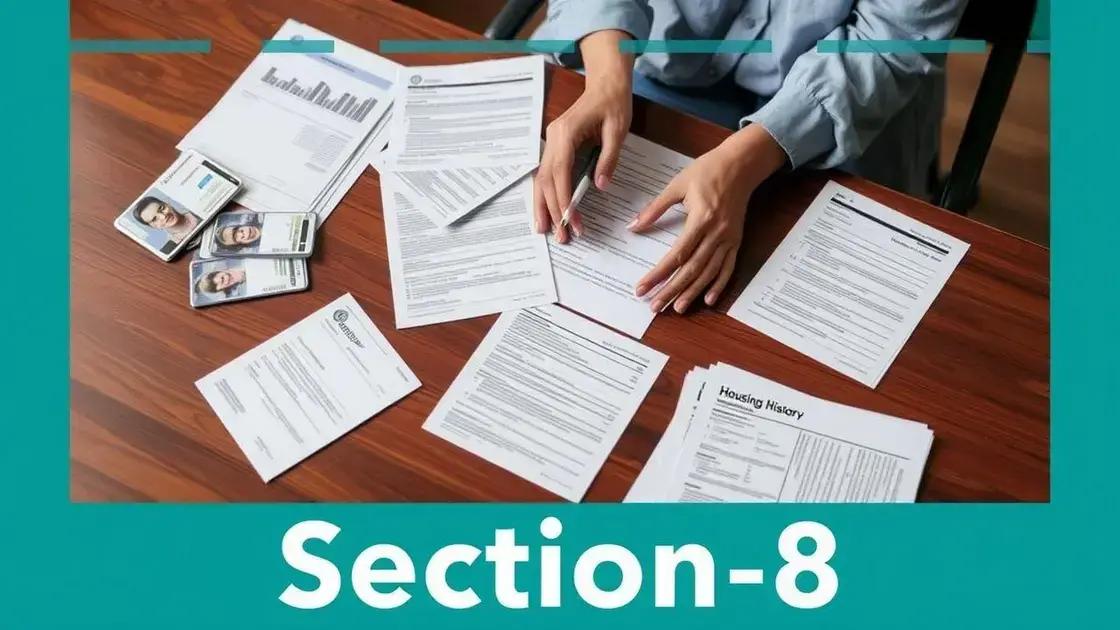
Gathering the necessary documents for Section 8 housing can feel daunting, but it is a crucial step in the application process. Having all required documents ready will help you avoid delays and increase your chances of approval.
Personal Identification
First, you need to provide personal identification for everyone in your household. This verification establishes who is applying for assistance. Common forms of identification include:
- Driver’s licenses or state IDs.
- Social Security cards.
- Birth certificates.
Make sure to have copies of each document, as the housing authority will require them when reviewing your application.
Income Verification
Your household income is a critical factor for eligibility in the Section 8 program. You will need to prove your income through various documents. This may include:
- Recent pay stubs from your job.
- Bank statements showing regular deposits.
- W-2 forms or tax returns from the previous year.
By preparing these documents, you can present a clear picture of your financial situation to the housing authority.
Housing History
In addition to personal and income documents, you should also gather information about your housing history. This can include:
- Addressees where you have lived in the past five years.
- Contact information for previous landlords.
- Any eviction records, if applicable.
This information is essential for the PHA to conduct a background check and assess your rental history.
Once you have gathered all these documents, it’s helpful to organize them in a folder or binder for easy access during your application interview. Keeping everything organized can streamline the process and showcase your preparedness. Remember, gathering necessary documents is a vital step in your journey to obtaining housing assistance.
Application process for Section 8
The application process for Section 8 housing can seem overwhelming, but breaking it down into simple steps makes it more manageable. Understanding each part of this process is essential for a successful application.
How to Start Your Application
Begin by contacting your local Public Housing Authority (PHA). They will provide you with the necessary application forms and information. Be sure to ask about the specific requirements and deadlines in your area. In most cases, you can obtain the application online or in person at the PHA office.
Filling Out the Application
When filling out the application, be thorough and accurate. Provide all requested information, including:
- Your personal details, such as name, address, and date of birth.
- Details about your household members, including their income and social security numbers.
- Information about your current living situation and rental history.
Double-check your application for errors before submission, as inaccuracies can delay processing.
Submitting Your Application
Once the application is complete, submit it according to the instructions provided by the PHA. Keep a copy for your records. After submission, you will receive a confirmation and instructions on the next steps. It may take some time for the PHA to process your application, so patience is key during this period.
During the approval process, you may be asked to verify your information or provide additional documents. This is a typical part of the application process for Section 8 housing. Respond promptly to any requests to avoid delays.
Waiting List
Many local PHAs have waiting lists due to high demand for Section 8 housing assistance. If you are placed on a waiting list, you may receive updates on your status, and it’s essential to keep your contact information up to date. Be aware that the length of time on a waiting list varies significantly between regions.
Understanding the application process for Section 8 is vital for maximizing your chances of receiving assistance. By preparing thoroughly and following the steps carefully, you can navigate this journey with greater confidence.
Common misconceptions about Section 8
There are many common misconceptions about Section 8 housing assistance that can lead to misunderstandings and discourage eligible individuals from applying. Clearing up these myths is crucial for those seeking help.
Misconception 1: Section 8 is Only for Low-Income Families
While many who qualify for Section 8 assistance are low-income families, the program is not limited to just them. It also serves elderly individuals, disabled persons, and sometimes families with moderate incomes. Understanding this broad eligibility can encourage a wider range of applicants.
Misconception 2: You Have to Wait Forever
Another common belief is that you’ll be stuck on a waiting list indefinitely. While it is true that many areas have waiting lists due to high demand, it depends on the local PHA and funding availability. Some places can process applications and provide assistance more quickly than others.
- Check with your local PHA to understand their specific waiting times.
- Stay updated on your application status.
- Ask about any opportunities to expedite the process.
Misconception 3: Section 8 Requires You to Live in Public Housing
Many people think that receiving Section 8 means you must live in public housing. This is not true. With Section 8 vouchers, you have the flexibility to choose where you want to live, as long as the landlord accepts the voucher. This could be an apartment, house, or townhouse in the private rental market.
Misconception 4: It’s Easy to Get Kicked Off the Program
Some fear that they can easily lose their Section 8 benefits. While it is essential to report any changes in income or family size, being proactive and communicating with your PHA can help you stay in good standing. Maintaining eligibility relies on their guidelines, so understanding those rules is vital.
By debunking these common misconceptions about Section 8, individuals can feel more encouraged to explore their options and seek assistance. Awareness and education are key components in helping potential applicants navigate the system.
FAQ – Frequently Asked Questions About Section 8 Housing
What is Section 8 housing?
Section 8 housing is a government program that helps low-income families, the elderly, and disabled individuals afford rental housing by providing financial assistance.
How do I qualify for Section 8?
To qualify for Section 8, you must meet specific income limits, family size regulations, and citizenship or eligible immigration status.
What documents do I need to apply for Section 8?
You will need personal identification, proof of income, and a history of your current and previous residences.
Are there any common misconceptions about Section 8?
Yes, some misconceptions include the belief that Section 8 is only for low-income families, or that recipients must live in public housing, which is not necessarily true.