Rental assistance options available in 2025 provide essential support for individuals and families facing housing instability, contributing to community stability and economic growth.
Rental assistance options available in 2025 are crucial for many facing housing challenges. Have you considered what support might be there for you? This article delves into the options that could make a difference.
Understanding rental assistance programs
Understanding rental assistance programs is essential for anyone facing housing challenges. These programs are designed to help individuals and families find and maintain affordable housing. Knowing how these programs work can make a significant difference for those in need.
Types of Rental Assistance
There are various types of rental assistance programs available. Each program has its own eligibility requirements and benefits. By exploring these options, you can find the right fit for your situation.
- Housing Choice Voucher Program (Section 8)
- Public Housing Assistance
- Community Development Block Grants (CDBG)
- Emergency Rental Assistance Programs
Rental assistance can be crucial in helping people secure a stable living environment. It’s important to know how these programs can impact your finances and housing security. Each program serves different needs, so understanding the specific rules and benefits can empower you to make the best choice.
How Rental Assistance Programs Operate
Most rental assistance programs involve applying through local housing authorities or nonprofit organizations. The application process may require documentation like income verification, proof of residency, and other personal information.
After submitting your application, you may need to attend an interview or provide additional details. Once approved, you will receive assistance that can cover part of your monthly rent or even help you find new housing options.
Awareness of rental assistance options can provide much-needed relief. Many people are unaware of the programs available to them. This lack of knowledge can lead to missed opportunities for help.
In conclusion, understanding rental assistance programs can open doors for many struggling with housing costs. By knowing the types of assistance available and how to apply, you can take important steps towards securing your living situation.
Eligibility criteria for assistance in 2025
Eligibility criteria for assistance in 2025 are crucial to understand if you are seeking help with housing costs. These criteria determine who qualifies for various rental assistance programs and how you can benefit from them.
General Eligibility Requirements
Each program may have specific requirements, but most rental assistance programs share common eligibility factors. You should keep the following in mind:
- Income limits based on household size
- United States citizenship or legal residency
- Verification of current housing status
- Other local requirements which may vary by program
Understanding these requirements helps you prepare the necessary documentation. This preparation can streamline your application process significantly. When you apply for rental assistance, be ready to present proof of income, residency, and other information.
Specific Programs and Their Criteria
Different programs have unique rules. For instance, the Housing Choice Voucher Program might prioritize families with children or individuals with disabilities. Likewise, other programs may focus on housing stability for homeless individuals.
Be sure to research the specific programs available in your area. Knowing which program best fits your situation increases your chances of obtaining assistance.
Local housing authorities often hold informational sessions. These sessions can be valuable for understanding not only eligibility criteria but also the application process. Attending these events can connect you with resources and support.
In summary, eligibility criteria for rental assistance in 2025 are there to guide you. Understanding these requirements is the first step toward accessing the support you need.
Types of rental assistance available
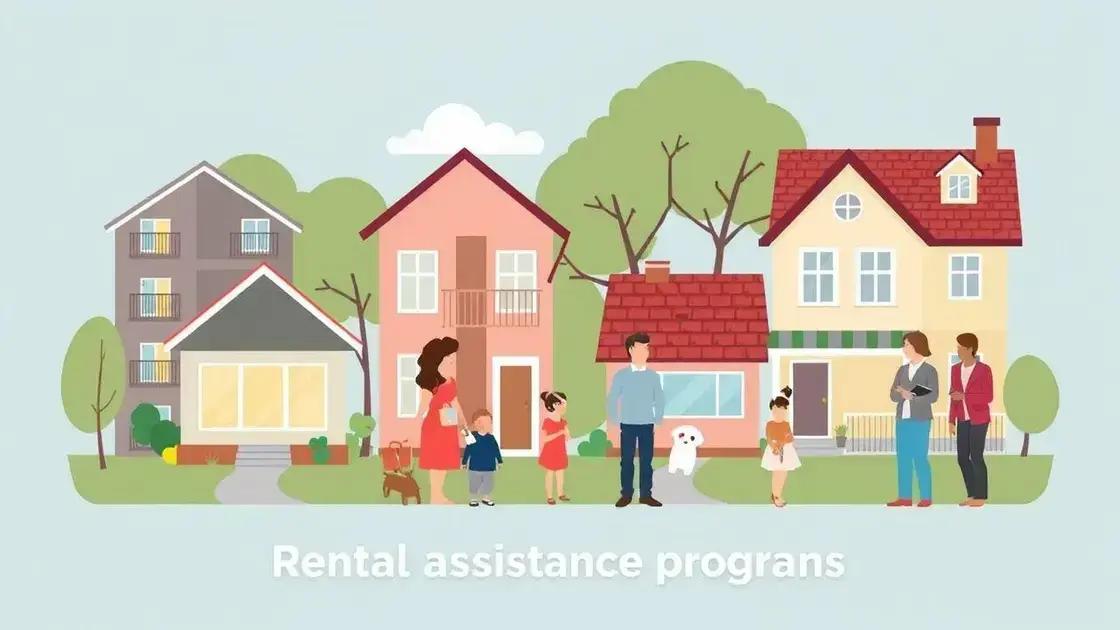
There are several types of rental assistance available to help individuals and families secure stable housing. Each type serves different needs and addresses various aspects of housing challenges. Understanding these options can empower you to find suitable help.
Housing Choice Voucher Program
The Housing Choice Voucher Program, often known as Section 8, allows families to choose their rental housing in the private market. This program provides participants with a voucher that covers a portion of their rent, making housing more affordable.
- Participants can select units that meet safety and quality standards.
- Benefits are based on income, family size, and location.
- Eligible households usually pay 30% of their income towards rent.
This program is popular because it provides flexibility to choose where to live, as long as the housing meets the program’s requirements. This is especially beneficial in areas with high rental costs.
Public Housing Assistance
Public housing programs are owned and managed by local housing authorities. These housing options are typically more affordable and designed for low-income individuals and families.
There are different types of public housing, including:
- Single family homes
- Multi-family apartments
- Senior housing facilities
Eligibility is often based on income and family size, similar to other assistance programs. Individuals living in public housing benefit from lower rent, stability, and community resources.
Emergency Rental Assistance Programs
Emergency Rental Assistance Programs provide immediate financial support for those facing eviction or financial hardship. These programs can help cover rent for a short period, offering relief during crises.
Some key points include:
- Funds may cover past due rent and late fees.
- Application processes can be expedited during emergencies.
- Support might be available for utility bills as well.
Accessing these types of assistance can be vital for maintaining housing stability during difficult times. It is crucial to act quickly and seek help as soon as you face financial challenges.
In brief, knowing the types of rental assistance available can lead you to a solution that fits your situation. By exploring your options, you take an essential step toward securing a stable home.
How to apply for rental help
Applying for rental help can be a straightforward process if you know what to expect. Many assistance programs have specific steps designed to guide you toward qualifying support. Being prepared can make the application process easier.
Gather Required Documents
Before starting your application, gather essential documents. This typically includes:
- Proof of income, like pay stubs or tax returns
- Identification, such as a driver’s license or Social Security card
- Rental agreement or lease
- Evidence of need, such as eviction notices or medical bills
Having these documents ready will speed up your application and provide the necessary information to assess your situation.
Finding the Right Program
Researching the various rental assistance programs in your area is crucial. Each program may have different eligibility criteria and available resources. Local housing authorities and community organizations often provide information about these programs.
Look for:
- Government websites that list available assistance
- Nonprofit organizations that support renters
- Community outreach programs that offer help
Connecting with these resources can help clarify your options.
Submitting Your Application
Once you have all documents and have identified the right program, it’s time to apply. Applications can often be completed online, in person, or by mail.
Pay close attention to:
- Deadlines for submission
- Instructions on how to fill out the application
- Contact information for assistance if you have questions
Following the instructions carefully can reduce errors and improve your chances of receiving help. After submitting your application, be sure to track its status and follow up as needed.
Understanding how to apply for rental help is your key to obtaining necessary assistance. With the right preparation and resources, you can navigate the process smoothly.
Impact of rental assistance on communities
The impact of rental assistance on communities is significant and multifaceted. By supporting individuals and families in housing stability, these programs contribute to the overall health of neighborhoods and local economies.
Strengthening Neighborhoods
When families receive rental assistance, they are more likely to remain in their homes. This stability reduces turnover and helps foster a sense of community. A stable neighborhood encourages residents to invest in their surroundings, leading to:
- Improved property values
- Increased community engagement
- Lower crime rates
- Local businesses
- Job creation
- Community services
-

Housing stability is linked to better educational outcomes. Families with stable housing environments can focus more on their children’s education, which can improve future opportunities.
Boosting Local Economies
Rental assistance programs also have a positive influence on local economies. When individuals can afford their rent, they have more resources to spend on goods and services. This spending supports:
As more residents achieve financial stability, businesses within the area benefit from increased consumer spending. This cycle can lead to even more jobs and economic growth.
Social Benefits of Rental Assistance
The social implications of rental assistance extend beyond housing. Stable housing has been linked to better health outcomes, reduced stress, and enhanced overall quality of life. With less worry about housing insecurity, families can focus on employment, education, and building their futures.
Moreover, communities that invest in rental assistance can reduce homelessness. By providing support to those on the brink of losing their homes, these programs can prevent individuals and families from facing severe housing crises.
Ultimately, the impact of rental assistance on communities fosters growth, stability, and wellbeing for all residents. By uplifting families and individuals, these programs create a ripple effect that benefits entire neighborhoods and local economies. Understanding this impact is crucial for advocating for ongoing support and resources necessary to sustain these efforts.
FAQ – Frequently Asked Questions about Rental Assistance Programs
What is rental assistance?
Rental assistance helps individuals and families pay for housing costs, making it easier for them to maintain stable living situations.
Who qualifies for rental assistance programs?
Eligibility varies by program but typically depends on income level, family size, and housing status.
How can I apply for rental assistance?
To apply, gather necessary documents like proof of income and complete an application for the specific assistance program you choose.
What impact does rental assistance have on communities?
Rental assistance positively affects communities by reducing homelessness, improving neighborhood stability, and boosting local economies.