Highlights from the latest presidential debates reveal candidates’ strengths and weaknesses on key issues like healthcare and the economy, influencing voter opinions and engagement in the upcoming elections.
Highlights from the latest presidential debates offer a fascinating glimpse into the minds of candidates. What caught your attention the most? Let’s dive into how these moments shape voter opinions.
Key moments that defined the debates
Throughout the latest presidential debates, several key moments stood out and helped shape the narrative. These pivotal moments not only showcased candidates’ personalities but also highlighted their positions on critical issues.
Memorable Interactions
One of the most striking instances involved a heated exchange over healthcare. Candidate A emphasized the need for universal coverage, while Candidate B raised concerns about costs. This direct confrontation resonated with voters, shedding light on their differing approaches to such a crucial topic.
Unforgettable Quotes
Another memorable aspect was the use of powerful quotes that captivated the audience. These quotes often encapsulated the candidates’ visions, making them easily shareable on social media.
- “Healthcare is a human right, not a privilege.” – Candidate A
- “We can’t afford to ignore the economic reality of our country.” – Candidate B
- “Change is necessary, but it must be sustainable.” – Candidate A
Beyond quotes, body language played a vital role as well. The candidates’ gestures and expressions mirrored their confidence and assertiveness during critical moments, impacting how voters perceived their fitness for leadership.
Moreover, responses to pressing questions about climate change revealed stark contrasts in their policies. Candidate A tackled the issue head-on, presenting a robust plan to combat climate change, while Candidate B’s vague responses left many viewers wanting more clarity.
Voter Reactions
The audience’s reactions also contributed to the debates’ intensity. Gasps and applause often interrupted candidates, signaling which points resonated most. These real-time reactions not only reflect public sentiment but also influence undecided voters.
Overall, the key moments from the debates not only provide entertainment but also foster essential discussions around the future of our country. Engaging actively with these highlights can help voters make informed decisions.
Candidates’ responses to major issues
During the debates, candidates’ responses to major issues showcased their differing views and strategies. These moments are crucial for voters to understand each candidate’s approach to pressing problems.
Healthcare Policies
Healthcare remains a significant concern for many voters. Candidate A proposed a comprehensive plan to expand coverage, emphasizing affordability and accessibility for all. In contrast, Candidate B focused on reforming the existing system, arguing that incremental changes would be more effective.
- Candidate A supports universal healthcare.
- Candidate B prefers to refine existing healthcare mechanisms.
- Both candidates stress the importance of cost management.
This lively exchange made the audience consider their own healthcare experiences. As issues such as prescription drug prices arose, candidates offered insights that resonated deeply with voters.
Climate Change Strategies
Another critical topic was climate change. Candidate A made sweeping promises for aggressive measures like transitioning to renewable energy sources. Meanwhile, Candidate B sought to balance environmental concerns with economic growth, advocating for a practical approach that considers job impacts in traditional energy sectors.
The stark differences in their plans highlighted the urgency of the climate crisis. Many voters appreciated Candidate A’s boldness, while others found Candidate B’s measured tone reassuring.
As the debate progressed, questions about economic inequality emerged. Candidate A emphasized education and job training as pathways to improve lives, articulating how investing in communities would revitalize struggling areas. Candidate B countered with a detailed plan focused on tax reforms aimed at helping small businesses thrive.
The various responses allowed voters to see the potential outcomes of each candidate’s policies. Engaging with these discussions is crucial for understanding how each candidate would tackle issues that impact everyday lives.
Voter reactions and insights
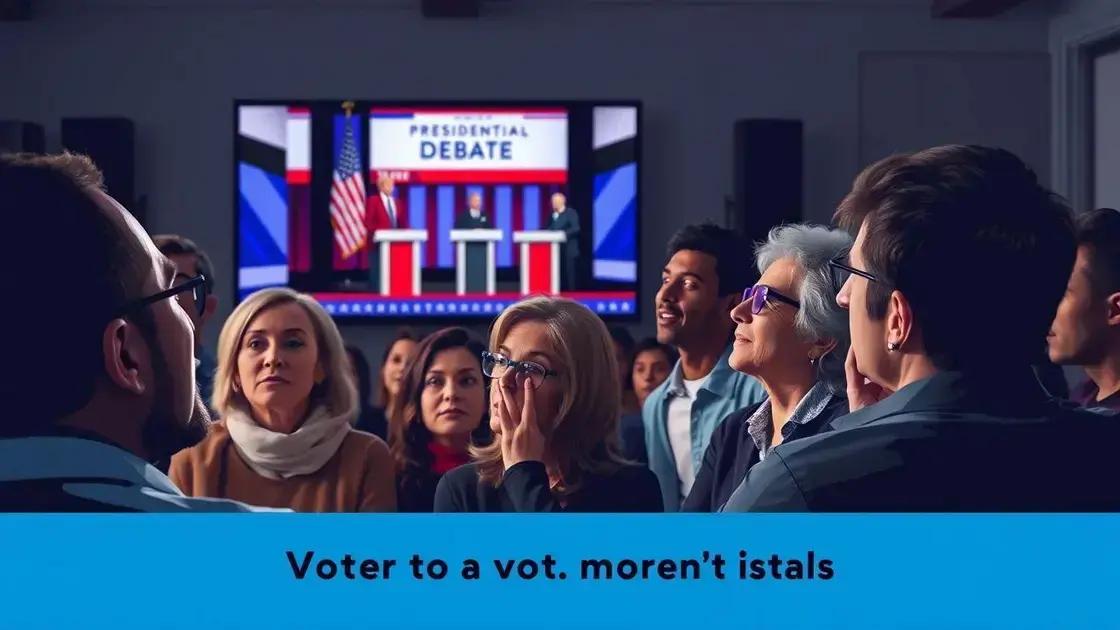
Voter reactions during the recent debates revealed the pulse of the nation. Many viewers took to social media to express their thoughts in real-time, showcasing a blend of excitement and concern.
Passionate Support
Some voters were enthusiastic about specific candidates, praising their responses to pressing issues. For instance, Candidate A’s focus on healthcare drew significant acclaim from those who felt that their own experiences were reflected in the debates.
- Health care solutions resonated with individuals facing challenges.
- Economic reform proposals attracted attention from business-minded voters.
- Environmental policies sparked interest among younger voters.
This interaction on social media illustrated how candidates’ policies connected with various demographics. As viewers shared their insights, it was clear that voters were highly engaged.
Divided Opinions
However, not all reactions were supportive. Some voters expressed frustration, especially regarding differing views on critical issues like climate change. Candidate B’s more conservative approach did not sit well with everyone, leading to heated discussions online about the need for immediate action.
The contrasting opinions allowed for a wider conversation about priorities in the election. Voters voiced their concerns about what they perceived as a lack of urgency from some candidates.
Throughout the debates, clear trends in voter sentiment emerged. Many sought transparency from candidates and yearned for detailed plans that resonated with their daily lives. Reactions varied from enthusiastic support to skepticism, showcasing the diverse priorities of the electorate.
In addition, focus groups after the debates captured candid reflections. Participants often mentioned their admiration for candidates who articulated their stances clearly, while others were disappointed by vague answers.
Overall, the continuous feedback from viewers not only influenced public perception but also indicated how effectively candidates communicated their messages. Engaging with voters’ insights is essential for understanding the upcoming electoral landscape.
Comparing debate performances
Comparing debate performances gave voters a clear picture of how each candidate handled themselves under pressure. Analysts noted that different styles emerged throughout the debates.
Delivery Styles
Candidate A’s performance was marked by a confident and assertive tone. This assertiveness appealed to many viewers who appreciated a strong stance on issues. In contrast, Candidate B took a more measured approach, often pausing to gather thoughts before responding, which some saw as thoughtful and others perceived as indecisive.
- Candidate A’s energetic gestures engaged viewers.
- Candidate B’s calm demeanor appealed to cautious voters.
- Body language played a significant role in audience perception.
The contrast in delivery styles generated discussions among voters. Social media was abuzz with opinions about which style resonated more effectively with the electorate.
Handling of Tough Questions
Another critical aspect of their performances was how each candidate approached tough questions. Candidate A often embraced the challenge, using personal anecdotes to illustrate points. This method connected with audience members who resonated with personal stories.
On the other hand, Candidate B carefully navigated tricky topics. While this approach sometimes led to informative and descriptive answers, it occasionally came off as evasive, which concerned some viewers.
Many commentators noted that voters tend to favor candidates who appear both knowledgeable and relatable. Engaging with questions effectively can sway undecided voters, making this aspect of the debates crucial.
As candidates addressed real-world issues, their performances illuminated not just their policies but also their characters. Engaging with emotional appeals and statistical data, both candidates showcased their strengths and weaknesses. Ultimately, how they performed in these moments helped shape public opinion about their readiness for office.
Predictions for the upcoming elections
Predictions for the upcoming elections are crucial as they help voters understand potential outcomes. Analysts and pollsters are closely examining trends that may shape the electoral landscape.
Current Polling Data
Polling data reveals insights into voter preferences. Candidate A’s support has surged among younger voters, while Candidate B remains popular with older demographics. These trends suggest strong divisions in the electorate based on age and priorities.
- Candidate A appeals to those focused on social issues.
- Candidate B’s messages resonate with economic and traditional values.
- Independent voters are increasingly influential in this election.
Additionally, swing states are a pivotal battlefield. Polling shows fluctuating support in key regions, indicating that both candidates must work hard to secure votes in these areas. Engaging with local issues within these states can make a significant difference.
Key Issues Influencing Voter Decisions
Several key issues are influencing the upcoming election. Economic recovery post-pandemic is at the forefront of voters’ minds. How candidates address inflation and job creation will be critical for gaining support. Candidate A’s focus on innovative economic solutions might attract younger voters, while Candidate B’s emphasis on stable, traditional policies may appeal to conservatives.
Healthcare and climate change are also pressing concerns that candidates must tackle head-on. Voters are increasingly interested in how each candidate plans to address these urgent topics. As debates progress, their responses will likely impact voter turnout and loyalty.
Moreover, social media plays a significant role in shaping public perception. Candidates who engage effectively online and build strong connections with younger voters are likely to gain an edge. The use of creative messaging and direct interaction will be crucial in capturing attention.
Overall, predictions for the upcoming elections emphasize the importance of understanding voter sentiment. Both candidates will need to adapt their strategies to resonate with the community’s evolving needs and preferences.
FAQ – Questions about the upcoming elections
What are the key issues influencing the upcoming elections?
Key issues include healthcare, the economy, climate change, and social justice, which significantly impact voter preferences.
How do candidates’ debate performances affect voter opinions?
Debate performances highlight candidates’ strengths and weaknesses, shaping public perception and influencing undecided voters.
What role does social media play in the elections?
Social media helps candidates engage with voters directly, spread their messages, and respond to public sentiment in real-time.
How important is polling data for predicting election outcomes?
Polling data provides insights into voter preferences and trends, helping to gauge support for candidates in key regions.