The legal landscape surrounding Roe v. Wade significantly impacts reproductive rights in America, with varied state laws potentially limiting access to abortion and healthcare services while advocacy efforts continue to shape future policies.
Roe v. Wade legal impact in 2025 could reshape many aspects of personal rights and healthcare across the U.S. As we delve into this topic, it’s vital to consider how this landmark decision continues to influence lives today. What changes might we see on the horizon?
Understanding Roe v. Wade’s historical significance
Understanding the historical significance of Roe v. Wade is essential to grasp the evolution of reproductive rights in the United States. This landmark case in 1973 established a woman’s legal right to have an abortion, fundamentally changing the landscape of personal rights and medical care.
Key Outcomes of Roe v. Wade
The decision was not only groundbreaking for women’s rights but also set precedents for various legal interpretations. Here are some major outcomes:
- Legalization of abortion during the first trimester
- Emphasis on women’s autonomy over their bodies
- Transformation of state laws concerning reproductive health
Before Roe v. Wade, many states had strict laws against abortion. Women often faced serious consequences and limited choices. The ruling highlighted the importance of a woman’s right to make decisions about her own health, sparking nationwide debates that continue to this day.
Impact on Society
The impact extended beyond legal bounds; it influenced social attitudes towards women’s rights and health care. This pioneering ruling empowered countless women to advocate for their rights. As we look at the ongoing discussions about reproductive rights, it’s important to recognize Roe v. Wade as a pivotal moment that continues to shape laws and individual freedoms today.
In summary, Roe v. Wade stands as a fundamental case in U.S. history. Its legacy is reflected in present-day policies and attitudes surrounding reproductive rights, fostering discourse that influences future legal decisions.
Current legal landscape post-Roe v. Wade
In the current legal landscape post-Roe v. Wade, the implications for reproductive rights have become more complex. Following the Supreme Court’s ruling, many states have implemented various laws that either protect or restrict access to abortion services. Understanding this evolving environment is crucial for women and advocates alike.
State-Level Variations
Following the overturning of Roe v. Wade, states have taken distinct paths. Some have passed stringent regulations, while others have sought to maintain or enhance protections for reproductive rights. The differences in state laws highlight the diverse political landscape across the country:
- Some states have enacted total bans on abortion.
- Others have put measures in place to expand reproductive health services.
- Several states are engaged in ongoing legal battles over proposed restrictions.
These varying approaches create a patchwork of laws that can confuse those seeking services, affecting access and availability. Women in restrictive states may face significant obstacles, while those in more liberal environments often have more resources available to them.
Impact on Women’s Health
The legal restrictions have profound effects on women’s health. Access to safe and legal abortion is a critical aspect of reproductive health care. Studies have shown that when access is restricted, many women may turn to unsafe methods. This can lead to serious health risks and increased mortality rates.
Furthermore, the uncertainty regarding future legal changes adds an extra layer of anxiety. Women might feel pressured to make swift decisions, impacting their mental health. As discussions around reproductive rights continue, it remains essential to emphasize the health implications intertwined with legal access.
Overall, the current legal landscape highlights the ongoing battle over reproductive rights, bringing to light the importance of advocacy and awareness for women’s health.
Potential state law changes in 2025
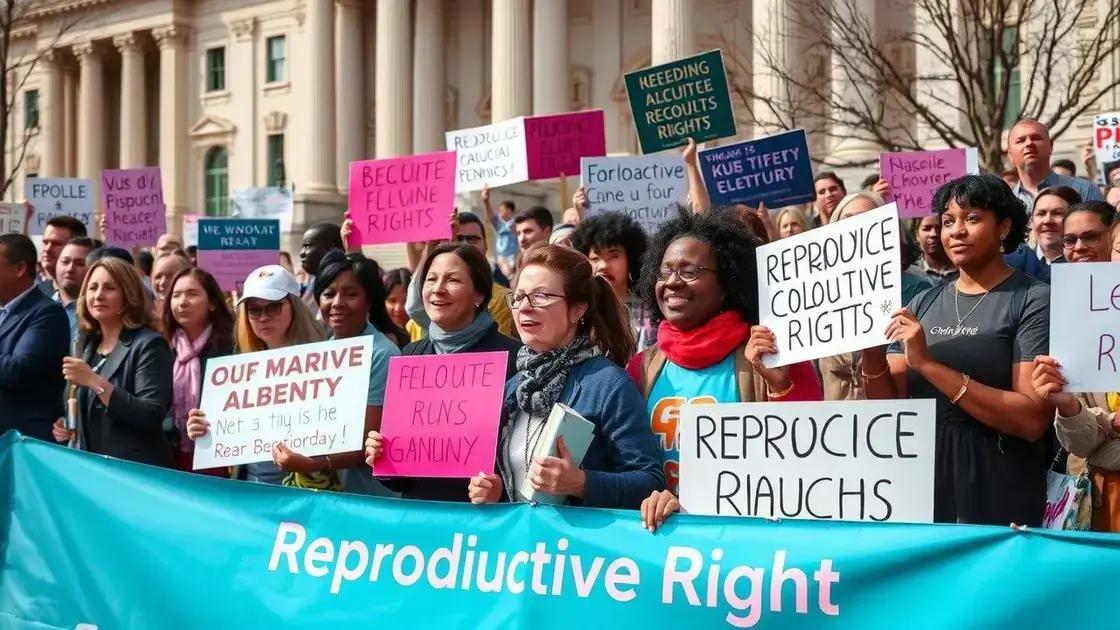
Potential state law changes in 2025 surrounding reproductive rights and abortion could vary significantly across the United States. As states react to shifting public opinions and federal legislation, many new laws are expected to emerge.
Emerging Trends in Legislation
Several notable trends are likely to shape state law changes:
- Increased restrictions on abortion access in conservative states.
- Expansion of protections for reproductive health in liberal states.
- New legal battles concerning existing laws, particularly around funding and resources.
These trends indicate that while some states may move towards more restrictive measures, others may seek to bolster reproductive rights. Many lawmakers are also looking at how public sentiment shifts might affect their legislative approach.
Grassroots Movements and Advocacy
Grassroots movements are expected to play a crucial role in shaping potential changes. Activists and organizations are likely to increase their efforts to mobilize public opinion. Many advocate for policies that ensure safe and legal access to abortion services. These movements often highlight:
- The importance of women’s health rights.
- The need for comprehensive reproductive education.
- The role of economic factors in accessing reproductive health services.
The growing awareness surrounding reproductive rights is prompting conversations at various levels, from local communities to state legislatures. As more people become engaged in advocacy efforts, the political landscape will continue to evolve.
Looking ahead to 2025, the intersection of public opinion, legislative actions, and advocacy efforts will be critical in forming the future of reproductive rights in America. It is essential for individuals to stay informed about changes that may directly impact their rights and health.
Implications for women’s rights and health care
The implications for women’s rights and healthcare after the Roe v. Wade decision are significant and far-reaching. Changes in laws and regulations can greatly affect the accessibility and quality of healthcare services for women.
Access to Health Care
One of the most direct implications is the accessibility of healthcare services. Women’s ability to access necessary reproductive health services can be hindered by new laws. This includes:
- Limitations on abortion services in several states.
- Increased challenges in obtaining contraception.
- Restrictions that may affect prenatal and postnatal care.
When access decreases, women’s overall health may suffer. Without the ability to make choices regarding their reproductive health, women may face serious consequences.
Impact on Women’s Rights
The legal landscape significantly influences women’s rights, particularly in reproductive decision-making. The ability to choose whether to continue a pregnancy is foundational to women’s rights and autonomy. Various aspects are being challenged:
- Rights to make personal health decisions.
- Protection against discrimination in healthcare settings.
- Advocacy for equal health services across state lines.
These challenges not only affect individual women but also have societal repercussions. Advocacy groups continue to fight for these rights, emphasizing the importance of autonomy and equal access to healthcare.
The evolving legal environment necessitates a robust conversation about the future of women’s rights and health care. It is crucial to remain informed while advocating for policies that support healthy choices for women everywhere.
Future predictions for reproductive rights in America
Future predictions for reproductive rights in America indicate a constantly changing landscape. As society and lawmakers react to shifts in public opinion and legal frameworks, the future will likely hold significant developments.
Potential Trends in Legislation
One crucial area to watch is the potential trends in legislation. As more states grapple with the implications of Roe v. Wade’s reversal, various actions could unfold:
- Increased proposals for state-level protections for reproductive rights in response to public demand.
- Continued legal challenges against restrictive abortion laws, aiming to preserve rights.
- The emergence of more stringent laws in states with conservative leadership.
These trends may create disparities, leading to a divided national approach towards reproductive health access.
Impact of Technology
Technology will also play a vital role in shaping the future of reproductive rights. As telehealth and digital health tools continue to grow, they might help bridge gaps in access, particularly in rural areas. Some implications include:
- Improved access to online consultations for reproductive health services.
- Mobile apps designed for reproductive health tracking and education.
- Increased availability of telemedicine for prescriptions and follow-up consultations.
These advances could empower women to take control of their reproductive health, ensuring they have the necessary resources to make informed decisions.
Furthermore, advocacy groups are expected to increase their efforts in education and outreach. As the conversation surrounding reproductive rights evolves, public awareness may lead to greater support for protective measures. Individuals are likely to become more active in advocating for their rights, driving changes at local and national levels. This advocacy can help shape policy decisions and ensure equitable access to reproductive health services.
In summary, the future of reproductive rights in America is uncertain and filled with both challenges and opportunities. Laws will continue to evolve, and society’s attitude toward these rights is shifting. Advocacy and technology will play key roles in ensuring that women can access the healthcare they need. It is important for individuals to stay informed and engaged in the conversation to protect and promote women’s rights and health. By understanding these implications, we can better prepare for the changes ahead and strive to create a more equitable landscape for all.
FAQ – Frequently Asked Questions about Reproductive Rights in America
What are the current trends in reproductive rights legislation?
Current trends show a wide variation in state laws, with some states enacting stricter regulations and others expanding protections for reproductive health.
How is technology impacting reproductive health access?
Technology is improving access through telehealth services and mobile apps, allowing more women to seek reproductive healthcare remotely.
What role do advocacy groups play in shaping reproductive rights?
Advocacy groups are crucial in raising awareness, mobilizing public support, and pushing for policies that protect and expand reproductive rights.
What can individuals do to support reproductive rights?
Individuals can stay informed, participate in advocacy efforts, and engage in discussions to promote awareness about reproductive rights and healthcare.